PAPER
Start on a permanent base
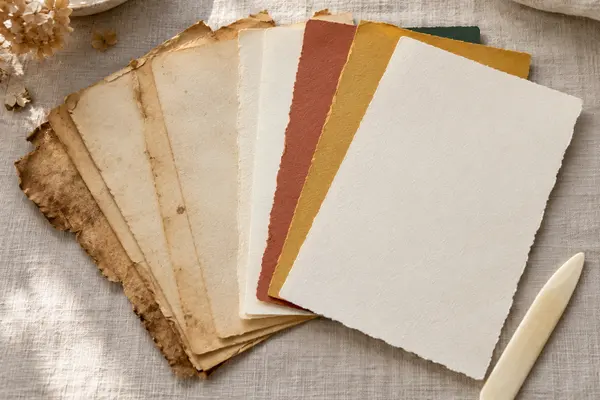
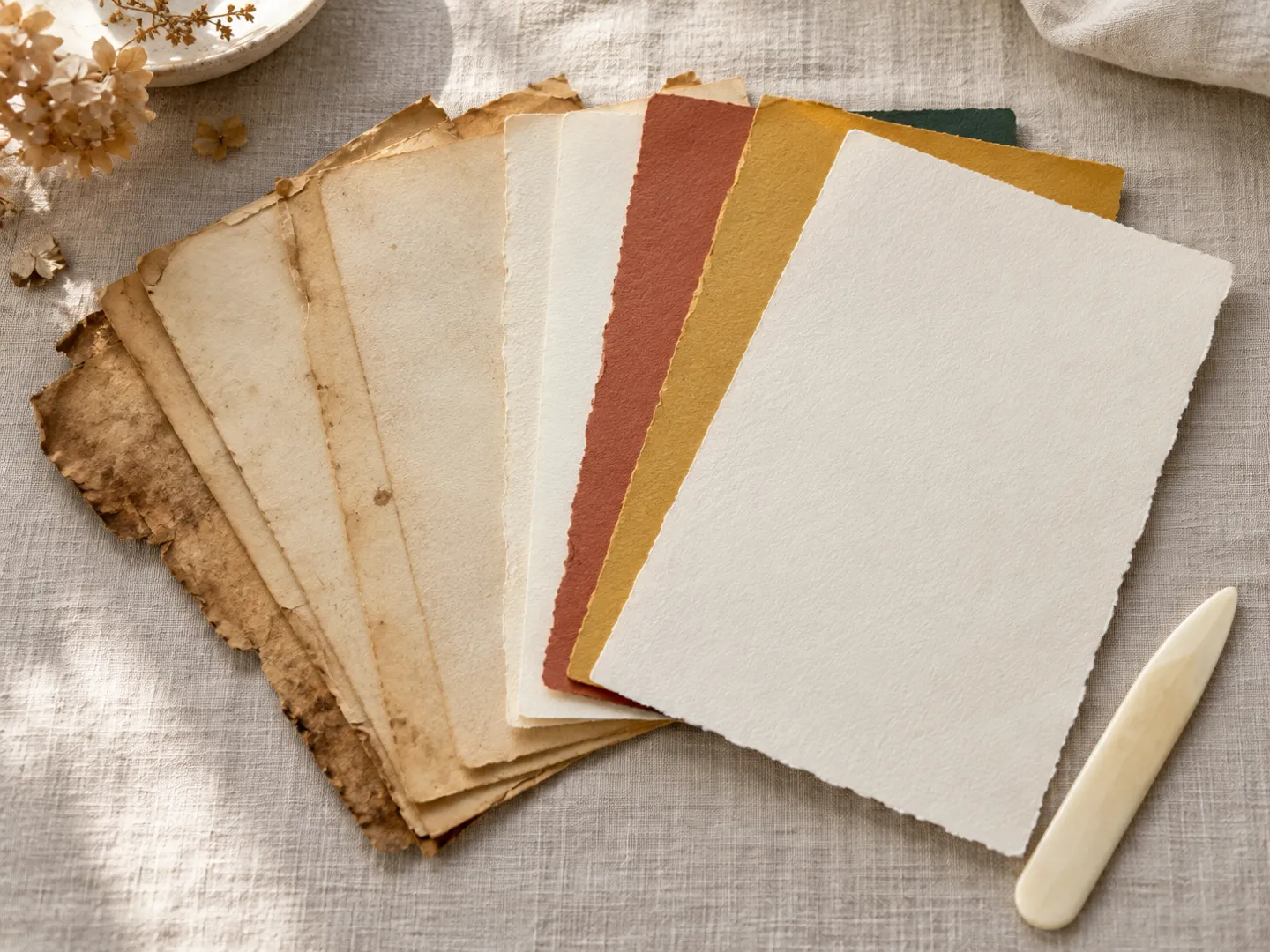
Wood-pulp scraps yellow and crumble; a base card made to last carries an alkaline reserve against acid.
Why paper ages doodlecollage
00PAPER, PASTE AND PATIENCE
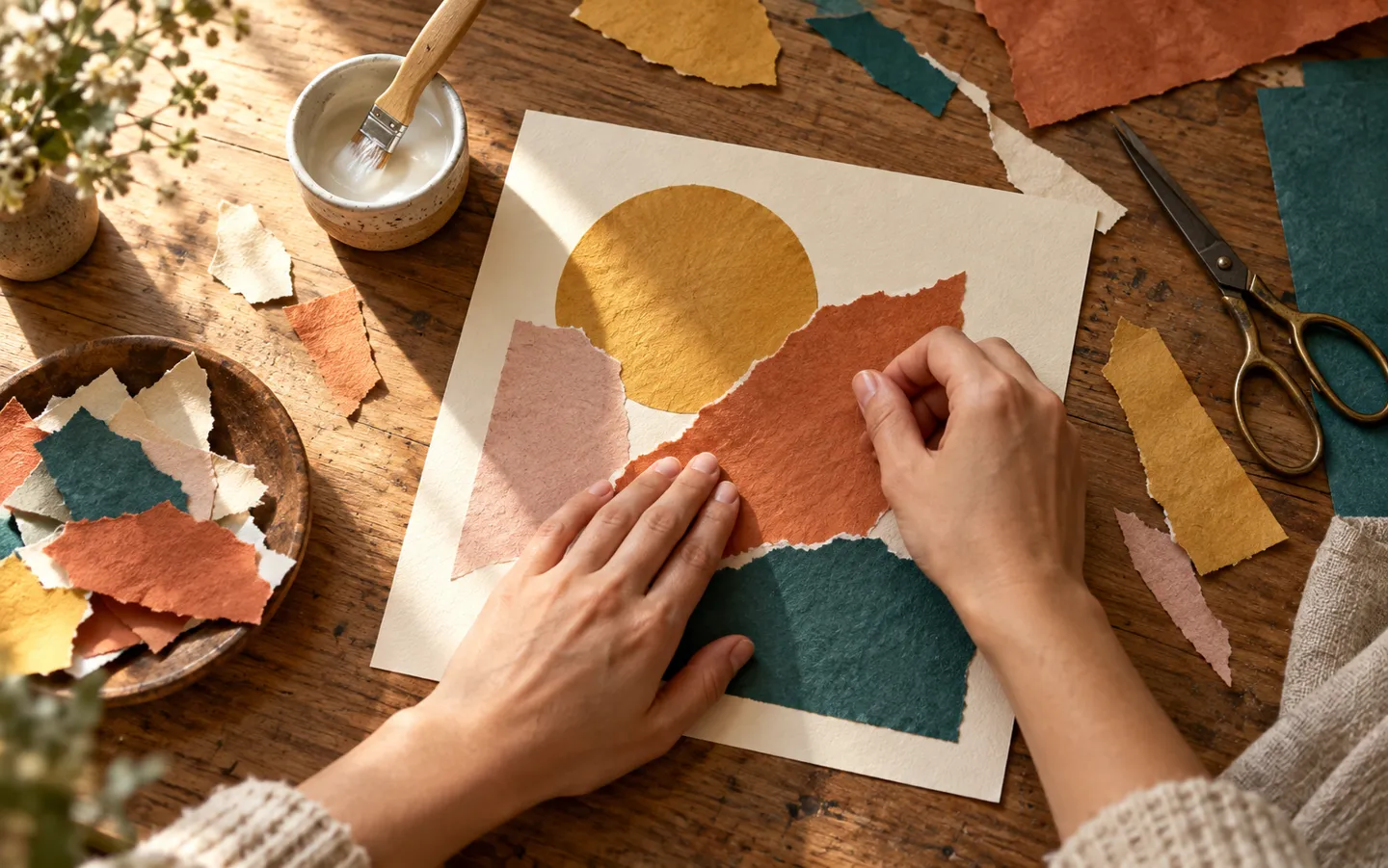
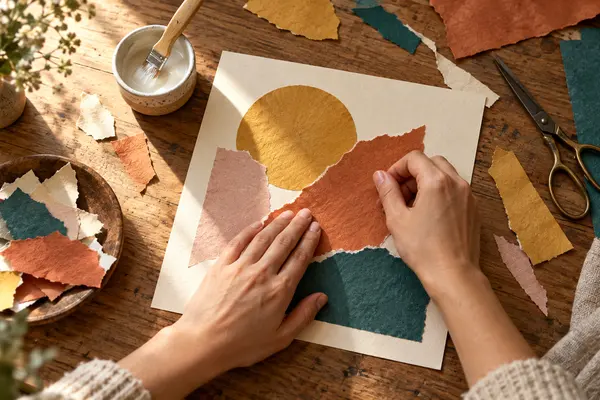
Collage started as pasted paper in 1912. Most of the trouble since has come from the paper and the glue.
A good collage is easy to start and easy to ruin: newspaper yellows, cheap glue stains, and sunlight fades the colour for good. Here is what museums and conservators say about the papers, paste and light that decide how long your work lasts.
Plain English, with the sources linked.
Check your materials01Principles
02THE SHORT ANSWER
Three choices decide whether a collage
looks the same in ten years.
PAPER
Wood-pulp scraps yellow and crumble; a base card made to last carries an alkaline reserve against acid.
Why paper agesPASTE
Conservators use wheat starch paste on paper; many commercial adhesives are unstable and can stain.
Check your glueLIGHT
Light damage adds up and cannot be undone, so a shaded wall beats a sunny one.
See the numbers03A QUICK MATERIAL CHECK
Pick a material or a place to hang it. The verdict comes from conservation sources: the Canadian Conservation Institute, the Northeast Document Conservation Center, the University of Illinois Library and the ISO permanence standard.
Short-lived does not mean forbidden. Plenty of great collages use newsprint; just expect it to change colour with time.
04TWO NUMBERS WORTH KNOWING
Paper ages quietly. These two figures
show why where you keep it matters.
50 vs 30,000 lux
Living room in the evening vs direct sun
Direct sunlight is roughly 600 times brighter than a living room in the evening. Because light damage is cumulative and irreversible, a collage in a sunny spot fades and yellows far faster than one on a shaded wall.
LIGHT · NEDCC
2× the life
Storage temperature 10°F (about 5.5°C) cooler
The University of Illinois Library notes that each 10°F drop in storage temperature doubles the lifespan of acidic newsprint. A cool cupboard is kinder than a warm loft.
HEAT · UNIVERSITY OF ILLINOIS
Neither effect is visible from one week to the next, which is exactly why it is easy to forget until the colours have already gone.
05MAKE ONE TONIGHT
Use a heavy card sold as acid-free or permanent as the base, so the support is not the weak point. Save newsprint for accents you are happy to see age.
Wheat starch paste stays tacky when thinned and bonds strongly once dry. Brush a thin, even layer and press each piece flat.
Commercial adhesives are often unstable and can disfigure paper. If you are not sure what is in a glue or tape, keep it off the finished work.
Choose a wall away from direct sun, or rotate pieces rather than leaving one up for good. Keep the rest flat in a box somewhere cool and dry.
06COLLAGE FACTS
Tate credits Georges Braque with the first papier collé: he drew on imitation wood-grain paper pasted onto white paper. He and Picasso made them in the last three months of 1912 and early 1913.
Collage takes its name from the French papiers collés. Tate notes it was first used as an artists’ technique in the early twentieth century, with paper, photographs, fabric and ephemera.
Publishers switched to inexpensive wood-pulp paper between 1870 and 1885. Its short fibres, acidic impurities and high lignin are why old newspaper cuttings brown and crumble.
Light damage is cumulative and irreversible: a faded collage will not recover in the dark. Ultraviolet light weakens, bleaches and yellows paper, but visible light harms it too.
ISO 9706 sets requirements for permanent paper: a minimum alkaline reserve such as calcium carbonate, pH limits, a maximum of easily oxidised material, and a minimum tear strength.
07QUICK QUESTIONS
Short answers to the questions people ask most.
Tate credits Georges Braque with the first papier collé, made by drawing on imitation wood-grain paper pasted onto white paper. He and Pablo Picasso made papiers collés in the last three months of 1912 and early 1913.
It comes from the French papiers collés, meaning pasted paper. Tate describes collage as both the technique and the finished work: paper, photographs, fabric and other ephemera arranged and stuck onto a support.
Newsprint is cheap wood-pulp paper with short, weak fibres, acidic impurities and high levels of lignin. Humidity helps produce more acid, and sunlight oxidises the fibres, turning the paper brown and brittle.
Paper conservators widely use wheat starch paste. The Canadian Conservation Institute says it has proved suitable for direct, long-term application to paper, while many commercial adhesives are unstable.
It is better not to. Light damage to paper is cumulative and irreversible, and the Northeast Document Conservation Center advises that no paper object should be on permanent display. Choose a wall out of direct sun.
08Sources
A NAME WITH LAYERS
doodlecollage.com is part of the DoodleSale portfolio. It isn't in an auction right now, but you can ask about leasing it.